
As a parent deeply invested in my child’s development journey, particularly during these formative years, I’m trying to move beyond just grades and understand the fundamental purpose. Considering children aged roughly 6-11, what are the core, overarching goals primary school is designed to achieve? Beyond teaching reading, writing, and arithmetic (the ‘3Rs’), what crucial skills, attitudes, and knowledge is it meant to instill? Is the focus primarily academic mastery, or are there equally important goals like fostering curiosity, social skills, resilience, critical thinking, creativity, and a positive attitude towards lifelong learning? Ultimately, what fundamental outcomes should parents expect primary schooling to prepare children for – both in their further education and in becoming capable, well-rounded, and adaptable members of society?
The key goals of primary school learning encompass foundational knowledge development, essential skill acquisition, and the cultivation of personal and social competencies necessary for lifelong learning and active citizenship. These goals include:
-
Foundational Literacy:
- Developing strong reading skills (decoding, fluency, comprehension across genres).
- Building proficiency in writing (spelling, grammar, punctuation, sentence structure, paragraph construction, creative and expository expression).
- Enhancing listening and speaking skills (attentive listening, clear verbal expression, participation in discussions presentations).
- Beginning to understand and use media literacy concepts.
-
Foundational Numeracy:
- Mastering number sense and basic operations (addition, subtraction, multiplication, division).
- Understanding and applying concepts of place value, fractions, decimals, and percentages.
- Developing skills in measurement (length, weight, volume, time, temperature).
- Introduction to geometry (shapes, spatial reasoning, simple properties).
- Building data handling skills (collecting, organizing, representing simple data).
- Applying mathematical thinking to solve practical problems.
-
Understanding the World:
- Developing scientific inquiry skills (observation, questioning, prediction, simple experimentation, drawing conclusions).
- Acquiring basic knowledge of life processes, materials, physical phenomena, and Earth/space environments.
- Building historical awareness (understanding the past, chronology, significant events and people).
- Developing geographical knowledge (maps, globes, continents, oceans, basic landforms, human and physical features, climate).
- Learning about society, community, diversity, and basic economic concepts.
-
Holistic Development:
- Personal & Cognitive Skills: Fostering curiosity, critical thinking (beginning stages), problem-solving, creativity, imagination, perseverence, and the growth mindset.
- Social & Emotional Learning (SEL): Developing self-awareness (understanding emotions, strengths, needs), self-management (self-control, managing impulses, setting goals), social awareness (empathy, appreciating diverse perspectives, recognizing others’ feelings), relationship skills (communication, cooperation, friendship, resolving conflicts peacefully), and responsible decision-making.
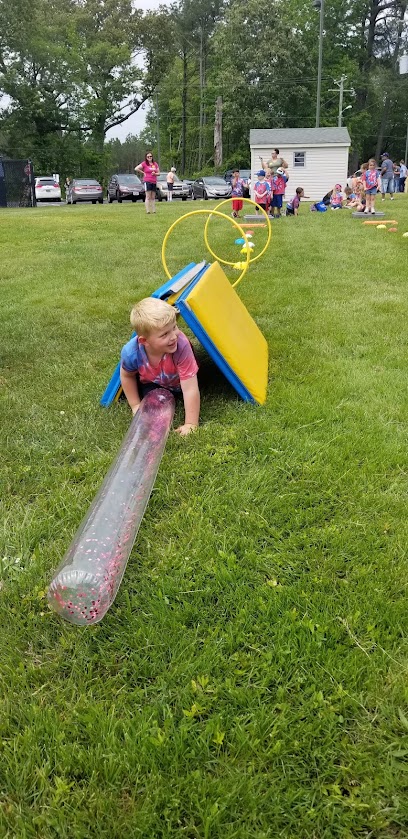
- Physical Development: Promoting gross motor skills (running, jumping, climbing, throwing/catching) and fine motor skills ( handwriting, cutting, using tools, manipulation).
-
Preparation for Future Learning:
- Establishing effective study habits and basic organizational skills.
- Developing independence in learning tasks.
- Building confidence in tackling new challenges.
- Creating a positive attitude towards learning and education.
- Providing the essential knowledge base and skill toolkit necessary for successful transition to secondary education and beyond.
- Moral, Spiritual, and Cultural Development (Often Integrated):
- Developing a sense of ethics, fairness, justice, and respect for oneself and others.
- Exploring different belief systems, values, traditions, and cultural heritages respectfully.
- Fostering appreciation for the arts, music, and creativity.
- Encouraging environmental awareness and responsibility.
These goals work interdependently to provide children with a robust grounding that equips them not only academically but also socially, emotionally, and personally to navigate their world, pursue further education, and become engaged and contributing members of society.